

I recently participated in Urbanarium’s debate on development charges — should we Share the Load or Cut the Bloat?
Below are the slides from my opening speech and some of my notes:
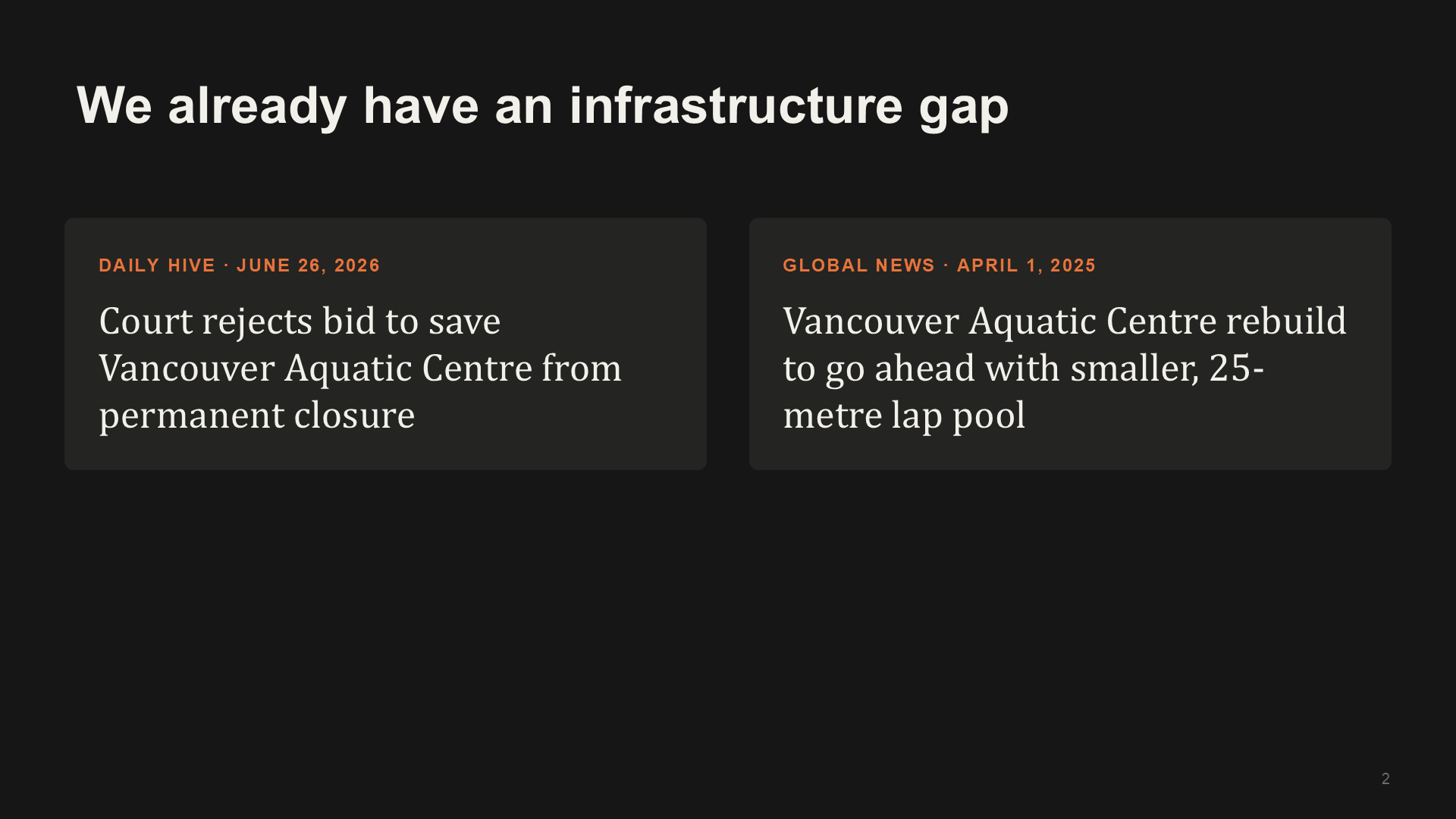
As every politician and talking head will tell you this month, it’s a critical time for the economy and this province. We’re in the midst of a trade war, and that comes on top of significant infrastructure constraints and a housing crisis that’s lasted far too long.
Recent immigration drawbacks have fooled some people into believing that the status quo is working on housing. It’s not.
We have a crisis and if we cut government spending now, we risk making that even worse.
The parks, beaches, and community centres throughout Vancouver are the things people really love about living here. Do we really want to give all that up, just because we’re too scared to try something new?

If the other team gets their way and we cut spending, the only parks and trees we’ll have left will be in photos like this one.
As happy as Mayor Mike Hurley looks here, I’d like to avoid that if possible.
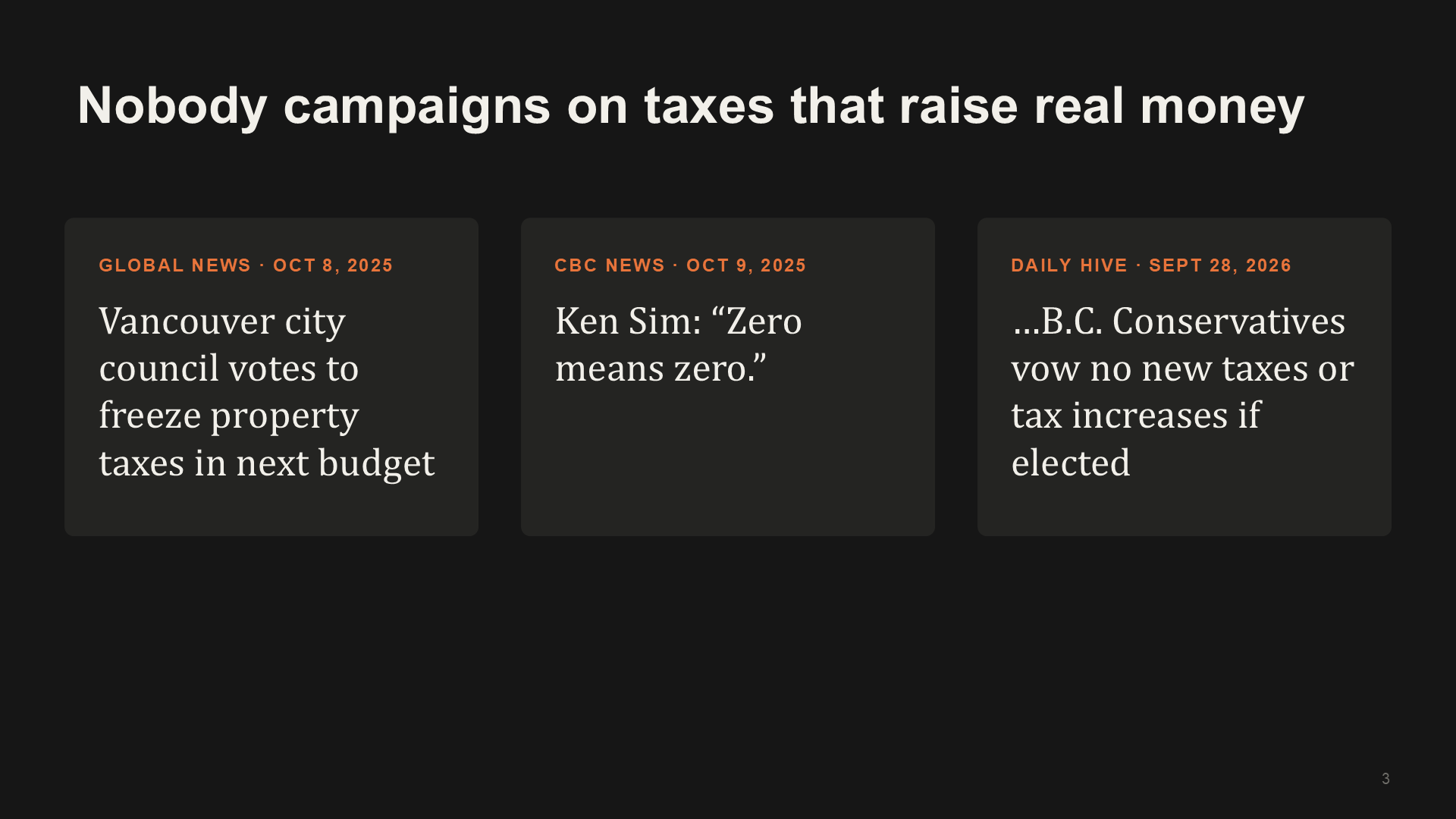
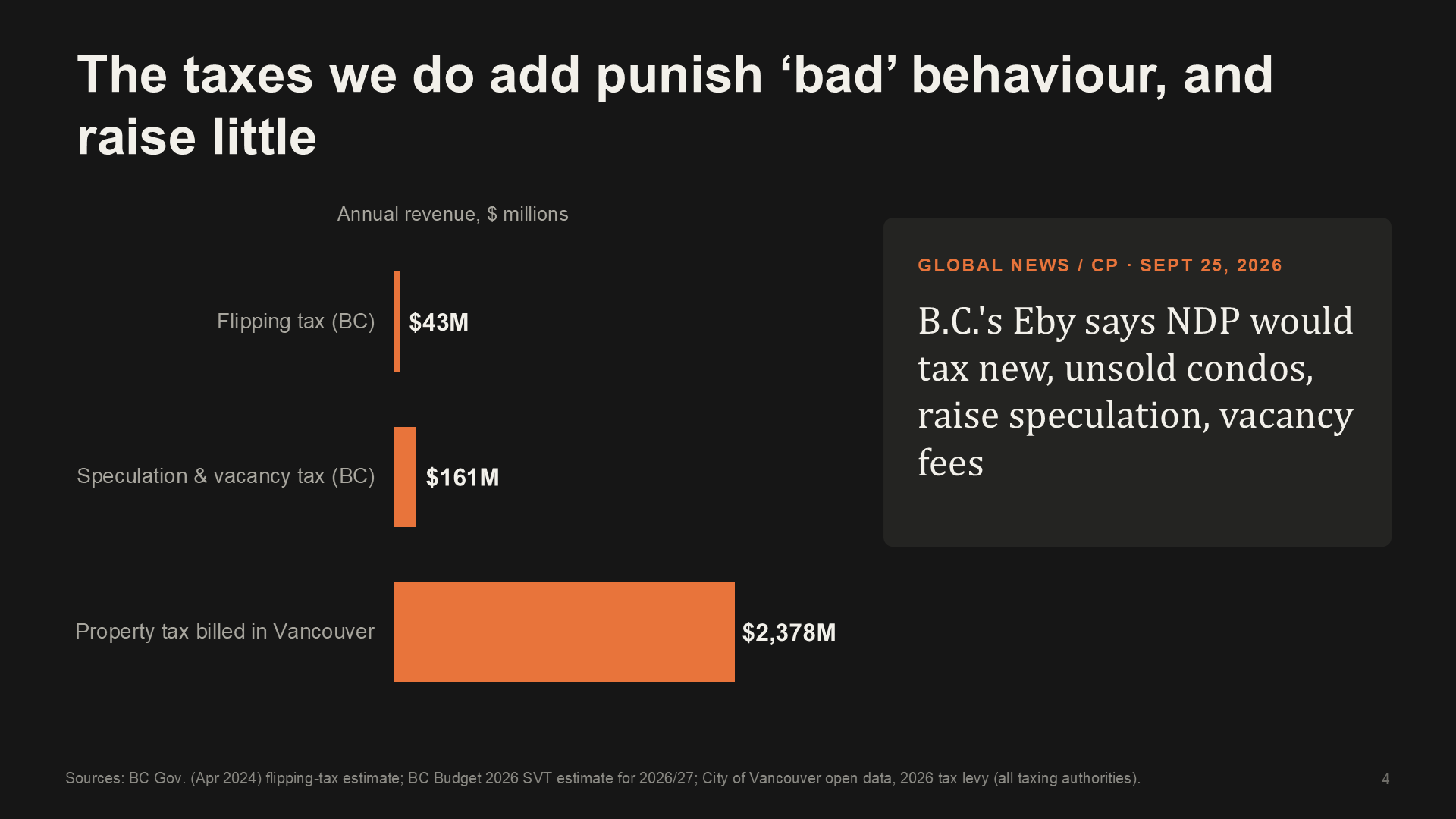
Developer charges are out-of-sight and out-of-mind for most municipal voters. If you buy a new home, you don’t even see the charge in the price like buyers do in Ontario.
Ultimately, housing is expensive in Vancouver, so we need someone to blame for that. And tax.
Developers fit the bill. And we even got to name the charge after them.
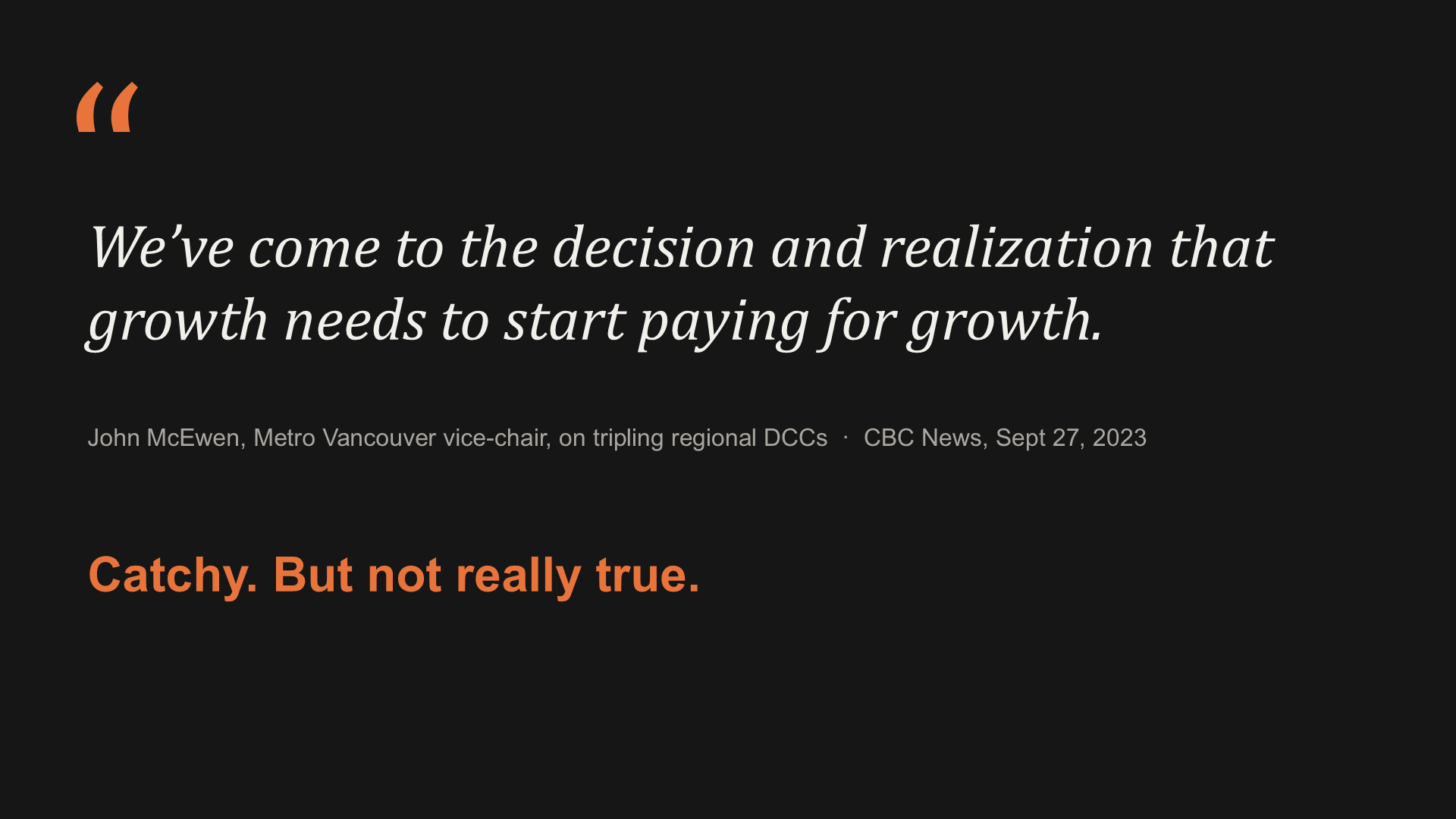
There’s a mantra out there that “growth pays for growth,” and it’s incredibly catchy. But newcomers don’t pay for the charge. It’s on the housing. And the housing is bought by whoever needs a home next, newcomer or not.
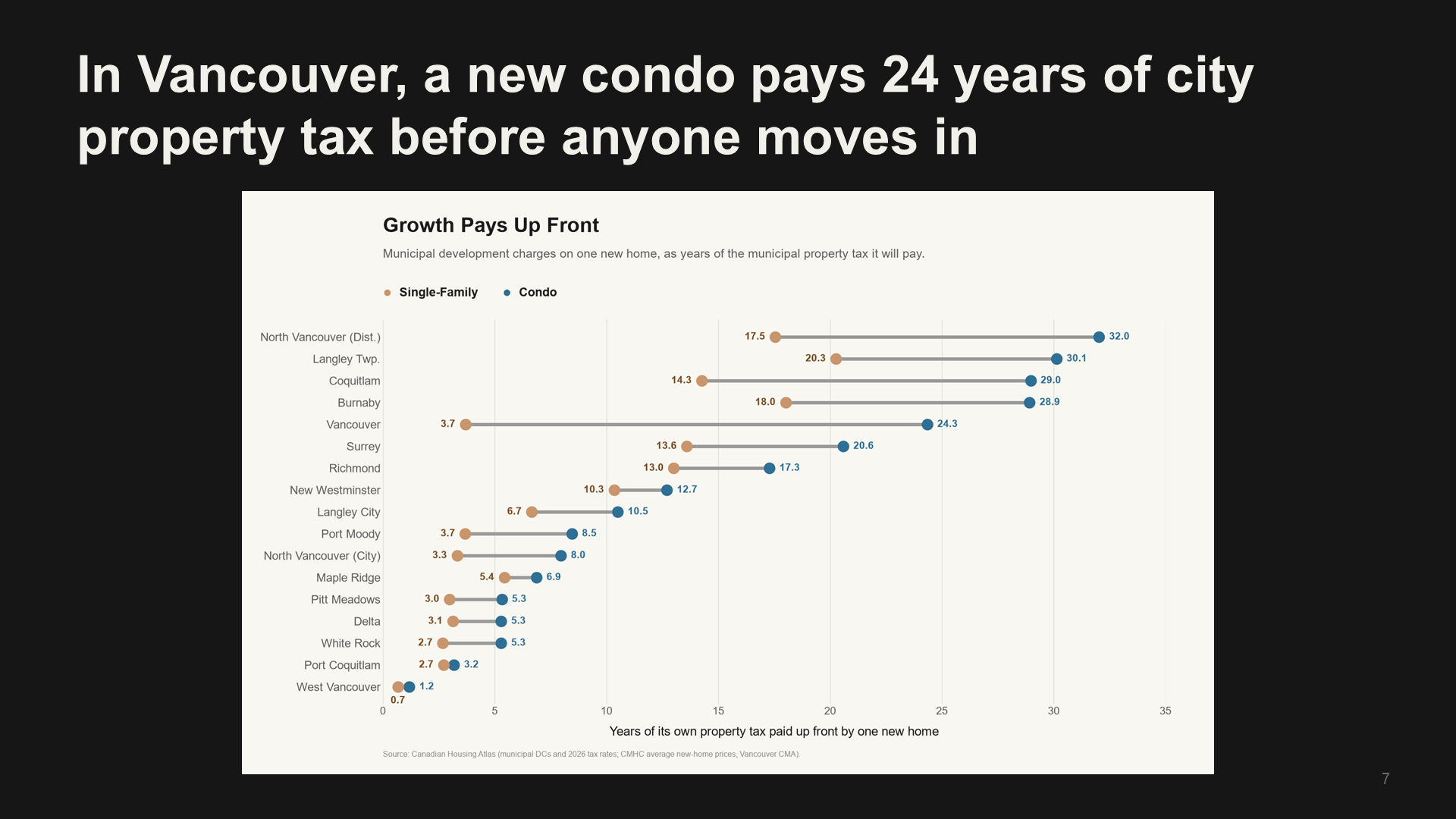
How do development charges compare to property taxes? Here, the development charges on a new home are converted into years of property tax a home like that would pay, using 2026 rates and CMHC’s average new-home price for the region.
That’s what “growth pays for growth” actually looks like. What would be fair here? 3 years? 5? 30?
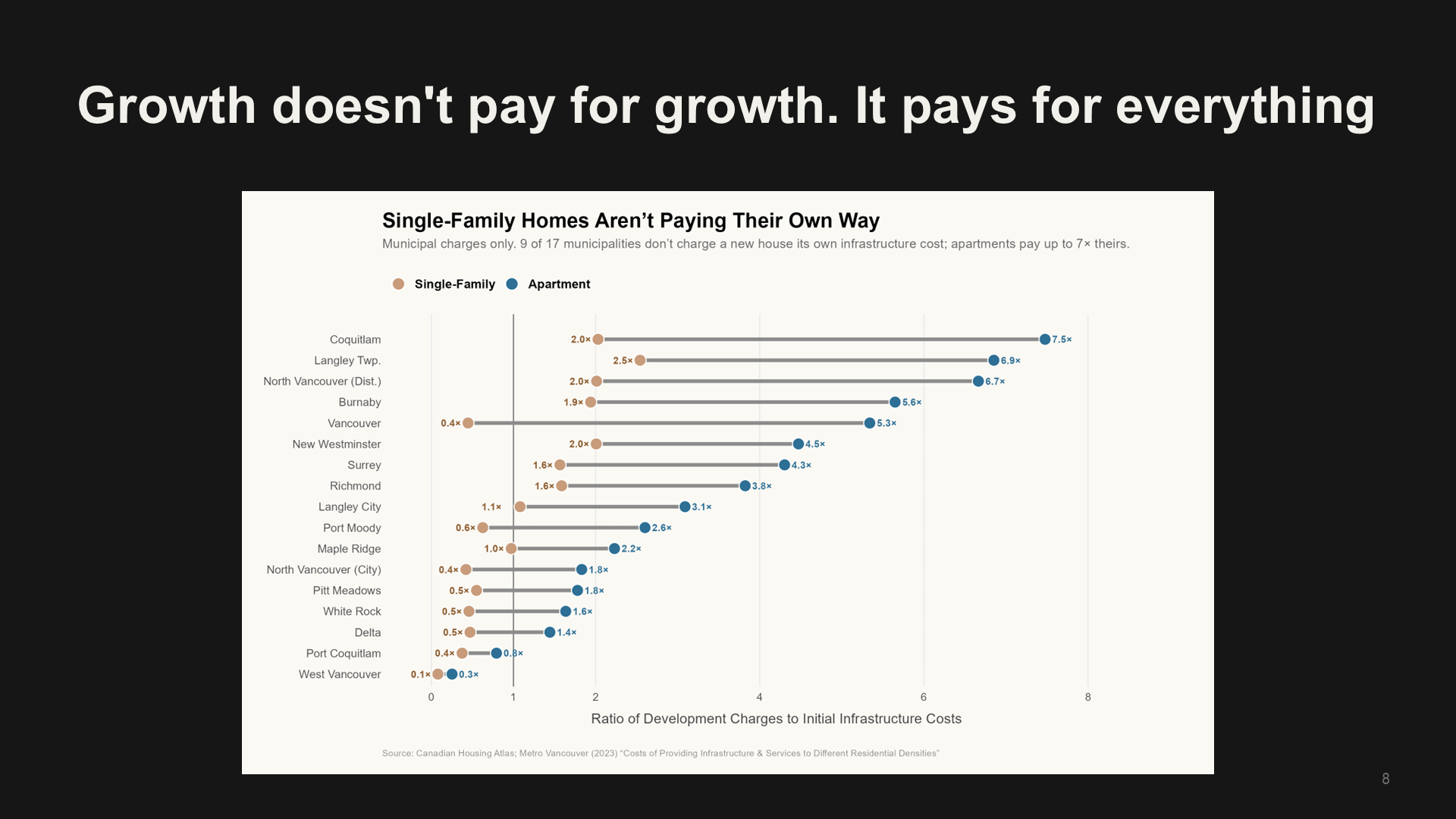
It’s not that apartments cost more to serve. Metro Vancouver’s own study says they need about a fifth of the initial infrastructure of a house. Most municipalities in Metro Vancouver don’t even charge a new house its own infrastructure cost. Apartments pay up to seven times theirs.
Vancouver is supposedly one of the most progressive cities in the country. And yet new multi-million-dollar houses have their infrastructure subsidized by everyone else, while new apartments pay five times the cost per unit.
As a heartless economist, I believe development charges are bad because they’re inefficient.
Can you imagine if we charged new parents at the hospital, up front, for 10–20 years of toys? It might be a little tricky to convince people to have kids. And we wouldn’t get as many new toys made as a result.
But charges aren't bad just because they're inefficient. They're also bad because they're unfair.
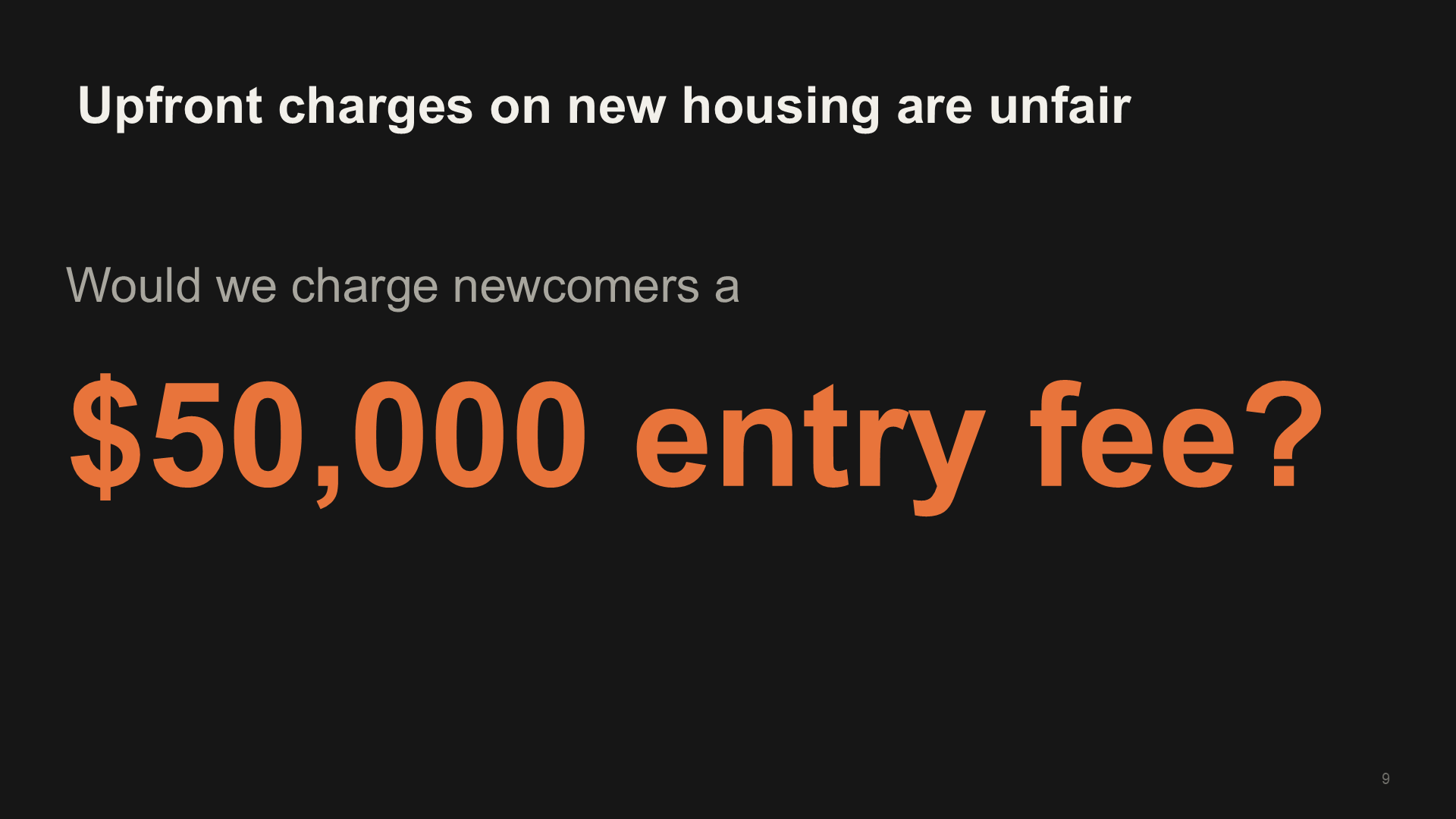
Imagine charging newcomers $50,000 to move to Vancouver. People would be up in arms. But put a fee like that on new housing, call it a “developer charge,” and nobody blinks.
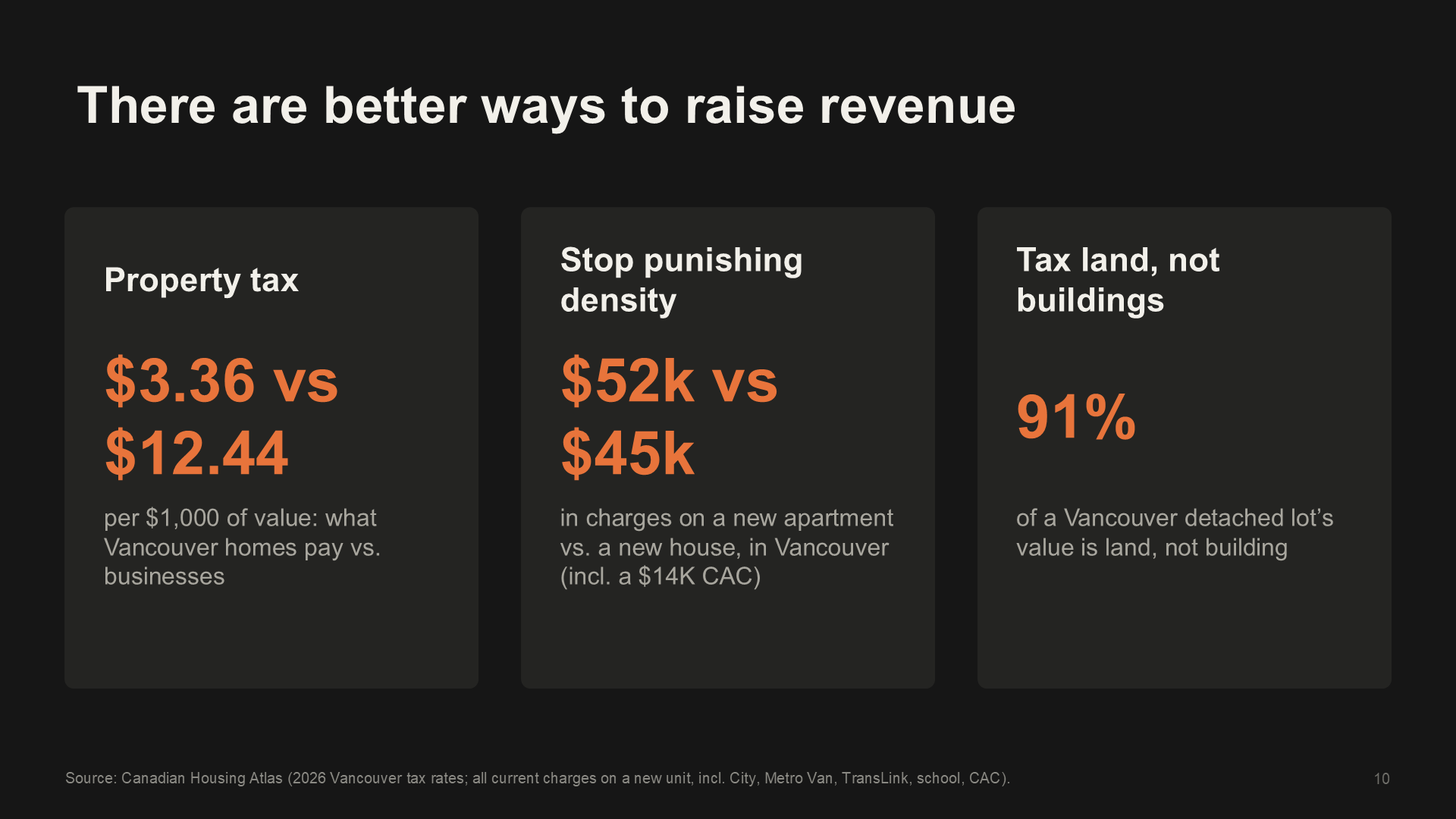
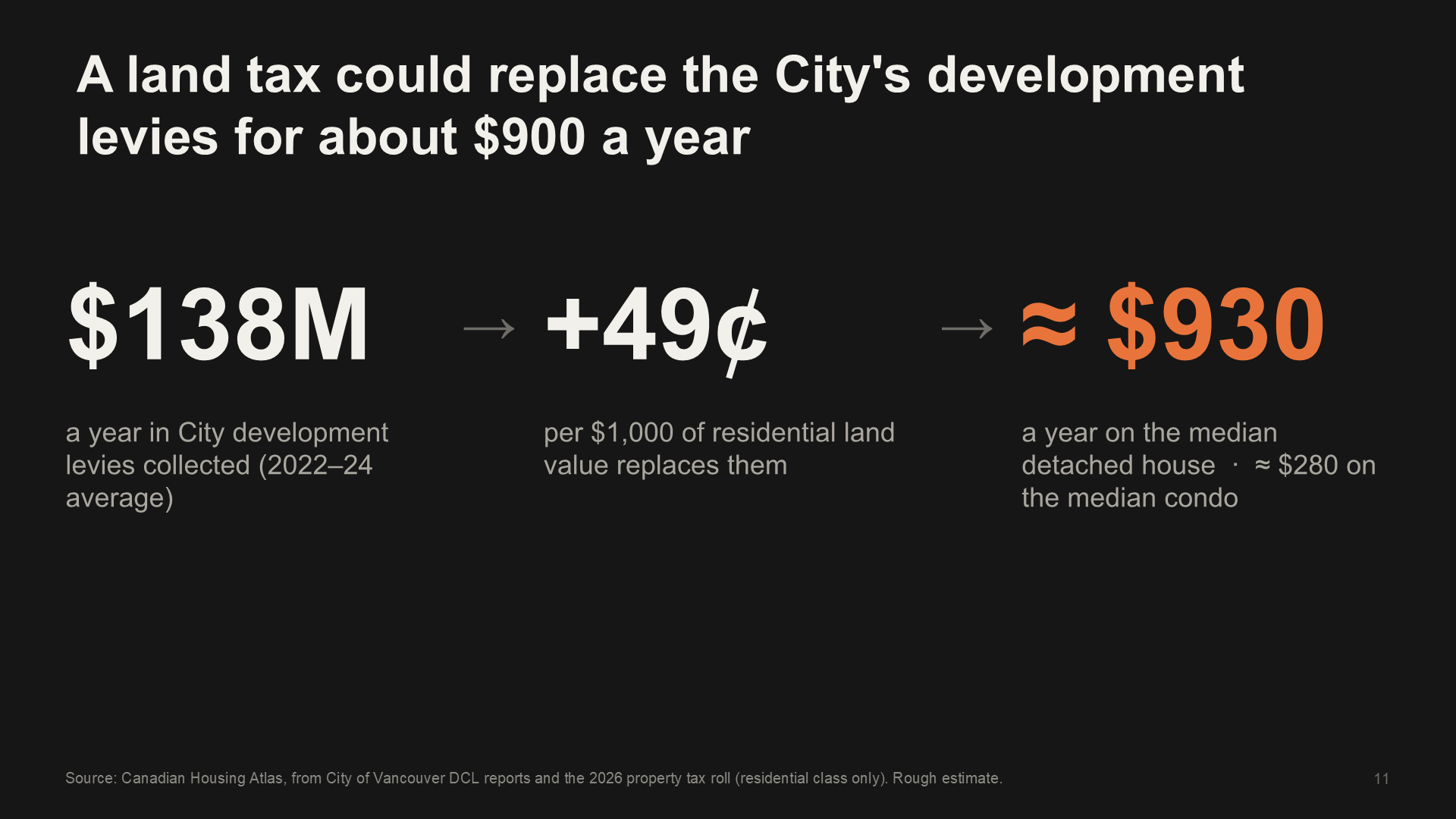

We've spent a decade trying to enforce equity through housing taxes, and we did it in the least equitable way we could think of: by targeting the smallest homes that cost the least to serve. If this is the progressive region we say it is, the way we treat new housing should reflect that.